
Understanding boundaries can be difficult in the Christian life. Today we’ll talk about whether boundaries are even biblical for the believer along with some practical tips.
We hear a lot about boundaries—both in secular and Christian spaces. Countless posts and videos encourage setting healthy boundaries to maintain good mental and emotional health.
But it can be confusing in the Christian culture when it comes to boundaries. On one hand, we hear that setting boundaries in so many areas isn’t biblical. After all, Jesus said to turn the other cheek, right? Walk the extra mile. Give not only your shirt but your cloak too.
Then on the other hand, we hear often that our faith is all about setting boundaries. Wear this, not that. Listen to this, not that. There are so many rules sometimes it can be hard to remember how to relate to anyone other than those in whatever specific sect of Christianity we identify with.
What does it all mean? Are boundaries even biblical? And if they are, how do we know where to draw the line?

Are Boundaries Biblical?
To answer that question, we start where we always should—with Scripture. First, consider the passages that seem to discourage boundaries, especially in Jesus’s earthly ministry:
- Turn the other cheek (Matthew 5:39; Luke 6:29).
- Walk the extra mile (Matthew 5:41).
- Love those who hate you (Luke 6:27–28).
- Never return evil for evil (Romans 12:17–19; 1 Peter 3:9).
- Give your cloak when someone takes your shirt (Luke 6:29).
- Jesus rebuked Peter for fighting His arrest (Matthew 26:51–52).
- Believers should expect persecution (1 Peter 4:12; John 15:18–20).
- Jesus endured torture and death though He was innocent (Luke 22–23).
At first glance, these passages seem to point toward limitless self‑giving. But Scripture also shows Jesus practicing discernment, restraint, and intentional limits:
- He didn’t begin His ministry until He was thirty years old (Luke 3:23).
- His ministry lasted only about three years (John 2:13; 6:4; 11:55–12:1).
- He chose twelve disciples from many followers (Luke 6:12–16).
- He often withdrew from crowds (Matthew 14:13; Mark 1:35–37; Luke 5:15–16; John 6:15).
- He refused to perform miracles on demand (John 6:60–66).
- He used parables rather than plain speech (Mark 4:33–34).
- He confronted the Pharisees with strong language (Matthew 23:13–36; Mark 3:1–6; Luke 11:40–52).
- He rested, prayed, and sought solitude (Matthew 14:23; Mark 1:35; 6:46; Luke 5:16; 6:12–13).
- He overturned tables in the temple (Matthew 21:12–13; John 2:13–17).
- He remained silent before His accusers (Matthew 26–27; Mark 14–15; Luke 23; John 19).
- His arrest only succeeded when He allowed it (John 7–10; Matthew 26:55–56).
- He declared Himself the only way to the Father (John 14:6).
Scripture also gives many instructions that imply discernment, separation, and wise limits:
- Do not be unequally yoked (2 Corinthians 6:14).
- Imitate God and avoid immorality (Ephesians 5:1–20).
- Let your yes be yes and your no be no (James 5:12).
- Do not love the world (James 4:4).
- Use your freedom to love, not indulge the flesh (Galatians 5:13).
- Love your neighbor as yourself (Matthew 22:36–40; Romans 13:8–10).
- You reap what you sow (Galatians 6:7–10).
- Live peaceably with all as far as it depends on you (Romans 12:17–21).
- Test every spirit (1 John 4:1–6).
- Consider others’ consciences in your choices (1 Corinthians 8; 10).
- Avoid those who claim Christ but deny Him by their actions (Romans 16; 1 Corinthians 5; 2 Thessalonians 3; 2 Timothy 3; Titus 3).
I don’t know about you, but I’m seeing both sides here. There are biblical examples both for setting boundaries and for . . . well . . . turning the other cheek.
What does this mean? Where does it leave us? How do we know when to set boundaries and when not to?
When and How to Set Biblical Boundaries as a Christian
#1 – Read the Bible.
The first step for us in learning what we should and shouldn’t do is always the Bible. We can never rely on what others say, even those who seem to be strong leaders.
And we can never just trust our own inclinations or what seems right. God gave us consciences, but they can easily be fooled. So many things around us sound good. They seem like they should be right, but we will be misled if we don’t read our Bibles to know what is true—to guide and train our consciences.

#2 – Pray.
A friend invited me to join a Bible reading plan on YouVersion at the end of last year. It’s a chronological plan, and I’ve really enjoyed it.
Before each day’s reading there are several prayer points that have reminded me of the importance of reading our Bibles and praying with the right motives. To seek to know God. To see Him on the pages. To allow any knowledge gained to help me love Him and others more. Not to puff up.
Part of this point may seem better suited for the previous one, but I’ve been realizing more and more that prayer is so important. It makes sense when you think about it, doesn’t it? The more I read my Bible, the more I see God’s desire for a relationship with us. Relationships require visits—connection.
Relationship with God can’t happen with a set of rules. We must always seek His will. He knows when something that looks good to us isn’t.
#3 – Live in a way that honors God.
I think if we read our Bibles with the right mindset—to look for God and not to gain knowledge—and pray with a heart that seeks God’s will for our lives, then it’s only natural that we would live our lives in a way that honors God and His work in our lives.
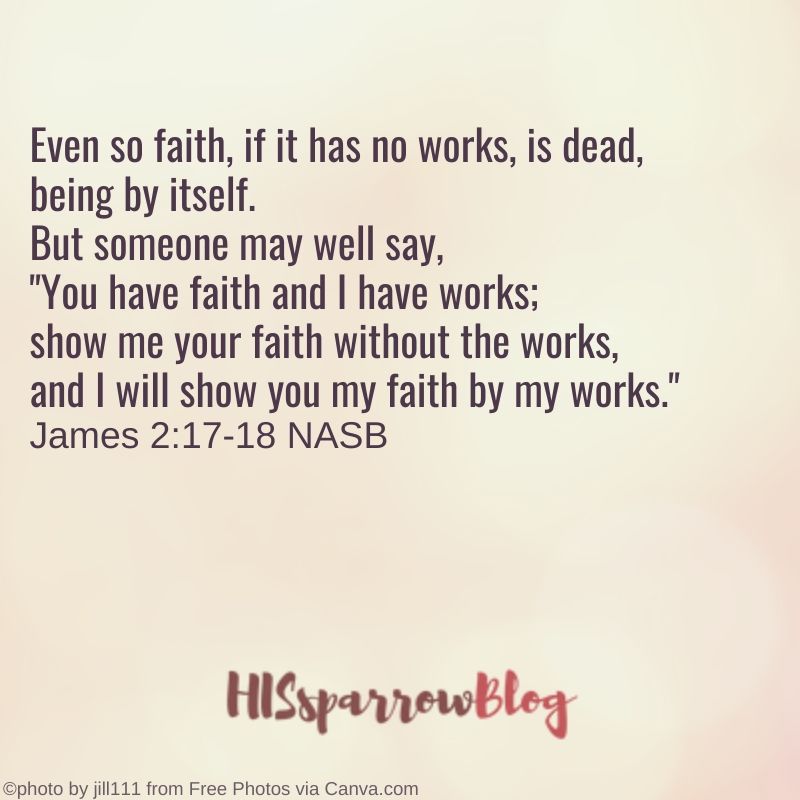
We’ll mess up. That’s okay. God isn’t asking us to be perfect, but as James says, our faith will come through in our actions.
#4 – Love Others.
Speaking of learning the importance of things, this one is huge. I can’t learn about God and not see His love for us. All of us.
And those actions that come from our faith most perfectly reflect the God who loved us despite our mistakes and flaws when we love the just-as-messed-up people around us.

#5 – Remember that boundaries are not the point.
Boundaries can become comfortable for us. We like to know exactly where we can move. Honestly, though, we’re walking contradictions as my husband likes to say because as much as we want to have a list of dos and don’ts, we struggle against them too.
One of the best things about having a relationship with God is that there isn’t a list of things for us. We’re in a relationship. Remember that even if we had that list, we would fail miserably at following it.
We must be willing to move in whatever direction God wills. We must be willing to grow. We can’t let even our boundaries become idols in our lives.

#6 – Remember your boundaries are yours.
Once we feel like we have things figured out, our next step is usually to project that outward. We expect others around us to follow them too. After all, we’ve figured out what’s best, right?
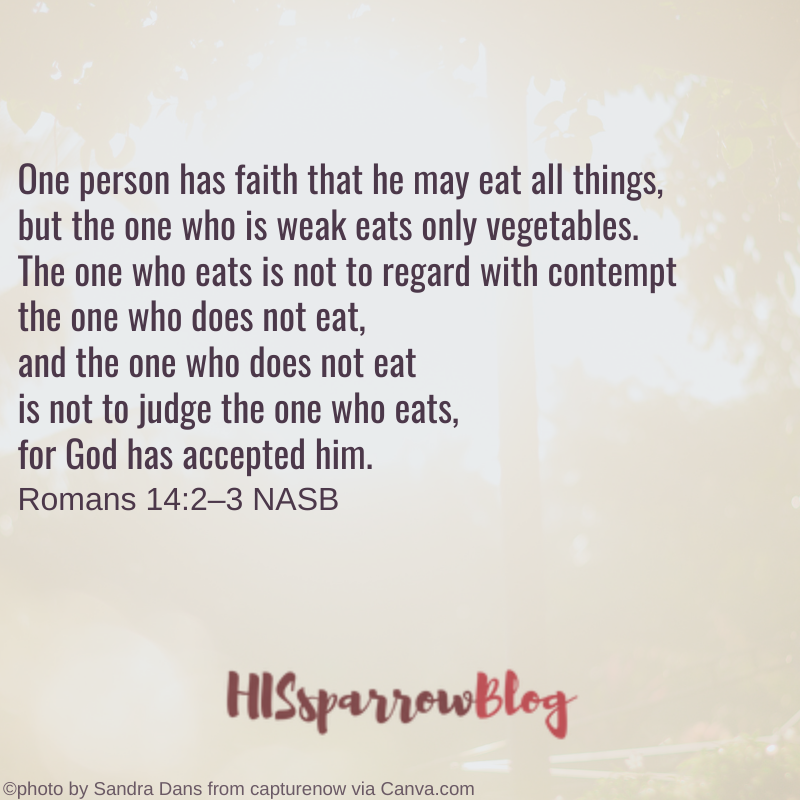
But one of the most interesting paradoxes in Scripture for me is in Romans 14. In chapter 13, Paul had advised the Romans on abstaining from many behaviors like drunkenness and jealousy. He instructed them to live in a way that honors God. Then in chapter 14, he basically says, beyond those things, there is a certain liberty.
For one person, a particular day is important to them. For another, a certain food. Whatever we do, we should do with a clear conscience. And never look down on another for what they do or don’t do.
As a sidenote, he also talks about refraining from some things that aren’t necessarily wrong for the believer that might hurt our witness because of the beliefs of someone else.
Yep, it’s a fascinating paradox. But we shouldn’t expect others to adhere to our boundaries. They are ours alone.
So . . . Are boundaries biblical for the Christian?
I think so. But like so many things in the Christian life, it is a paradox.
We can go too far in either direction. So where is the line? Like so many things in our Christian walks, it’s a paradox. Your boundaries may look different from mine, and that’s okay. If we’re both seeking God’s will and leaning into Him, we may both be right. Mind blowing, isn’t it?
Have you wrestled with boundaries in your life? What has God taught you along the way? share in the comments below.
More reading
- How to Be a Good Neighbor from HISsparrowBlog
- Simple Reminders for Receiving Criticism Well from HISsparrowBlog
- Why We Gotta Stop Shoulding Ourselves and Others from HISsparrowBlog

I frequently link up with the following: Grace & Truth with Embracing the Unexpected, Instaencouragements with Patsy and her crew, Let’s Have Coffee with Joanne Viola, and Blessing Bloggers with Deb Wolf.













I agree that boundaries can be tricky! They’ve definitely become more and more prevalent in today’s culture, for better or worse. You’re so right about them being a paradox. One question I sometimes ask myself with boundaries is: is this boundary creating more love in the world or less? Asking questions are easier than finding answers though. Hope you’re doing well, Ashley!